Richard Maddever is a third-generation farmer on the Suffolk-Essex border, near Sudbury. The family manages about 3,000 acres, 2,500 of which are arable and the rest used for stewardship, much of which is LENs-funded.
In a recent interview, Richard explained the benefits of LENs for him, his farm and the local landscape.
Tell us a little about the farm
We’re an all arable farm but we are now working with neighbours to have their sheep graze here too. Our arable is cereals, producing soft wheat for flour, which goes to the Midlands for biscuits and cakes, and barley, which goes to Stowmarket to make malt for Maltesers and beer. We’ve also introduced some alternative crops recently, such as borage, which is farmed for its oil, creating health products. It is a really drought-resistant crop.
When did you first introduce regenerative agriculture practices to your farm?
I can tell you exactly when that moment was. It was the autumns of 2018 and 2019, the first where we just had torrential rain. It just did not stop. And the whole business was on the line, because if you can’t get those autumn crops established, then your year is a disaster.
We went out and bought a direct drill to help. We needed a different seed drill as our trusty old disc drill just couldn’t cope with the sticky clay soils that year. It was a light bulb moment where we realised that with direct drilling, we could save time and money by moving less soil to establish our crops. There are many soil health benefits too and we’ve seen those improvements such as increasing organic matter. It was a few years after that that I came across LENs and it made complete sense to get involved.
We’ve had a number of dry springs now also which have really impacted crop establishment. Spring barley for example needs to meet a certain spec for the end user. If its too dry and the plant won’t grow, it won’t use the nitrogen fertiliser required to meet those targets. It could even be lost to the atmosphere! Direct drilling can help again here but retaining moisture in the spring a little bit longer in the soils is vital. LENs has really helped here with the switch to reducing cultivations.
Apart from the funding, what was it that LENs offered that you couldn’t get elsewhere?
There were things that I wanted to do and LENs meant that they were viable. The River Stour runs right through the middle of the farm. So, many of the things that we do with LENs are about working with the river rather than fighting it ,which had been the case for decades.
If you go back 10 years, the Environment Agency would be here every winter with an enormous digger, dredging the river and trying to stop the flooding. Trees would fall in, riverbanks would collapse and we got flooding in the fields, which leads to weed problems, black grass burden and so on.
Now, I have a 10-year scheme with LENs for willow planting, which began in 2023. We’ve planted 100 trees along the river. It’s stabilised the riverbank and provided shading. We have large grass buffers along the bank and apply no products anywhere near the river anymore to avoid pollution going into the water.
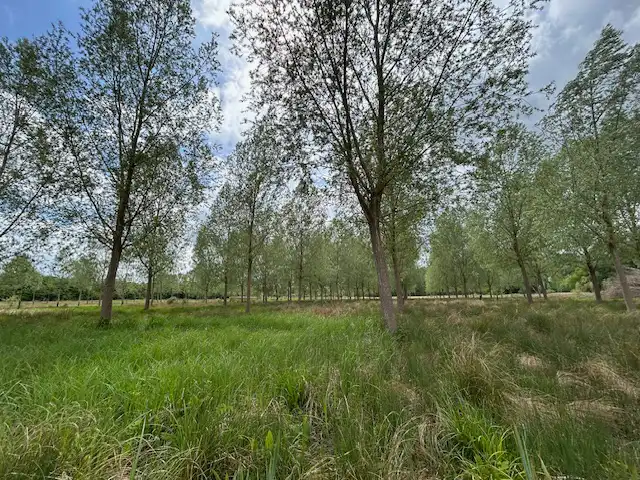
Richard Maddever’s 10-year scheme with LENs for willow planting, which began in 2023.
We also have an agroforestry scheme and tree nursery. The idea that we could do something long-term, to the benefit of the farm and not fighting the river as before was an eye-opening moment.
Without some support, whether it’s financial or the encouragement, I just wouldn’t have done it, and we would have just carried on trying to farm that land, which is an increasing struggle with pressure from many angles.
Beyond financial support, it’s been about knowledge sharing and ideas. Every year, we have a get-together with LENs and speaking to other people. It’s amazing what ideas are shared.
Is that networking an important part of LENs?
Farming has been very, very tough in the last couple of years. The last year is the toughest I’ve ever known it. The phrase ‘mental health’ is not something I ever thought I would be using for myself, but I’m not going to the meetings and discussions because I have to. I’m going because I know that it does my mental health good. I get ideas. Every now and then I’ll have a 30-second conversation with someone that could be worth thousands because of something I’ve learned that I didn’t know was there or something that’s a new idea.
Farming has become isolated. So, the cluster groups and get-togethers are really important now.
Alongside the tree-planting, what else has LENs helped you do?
2023 was the first year that I received funding and I started with cover-cropping and reduced cultivations. I’ve also used LENs funding to help pay for biostimulant treatments for the cereals.
Last year, I received funding for an innovation measure. Equipment is too expensive if it isn’t already tried and tested, so I decided to try for a stubble rake. It’s a very minimalist cultivation machine. And it has helped changed the way we farm. A stubble rake is a large piece of machinery that has lots of tines that bounce across the ground. It just shakes all the seeds to the ground and covers them up. It’s very fast and cost-effective and of course, environmentally friendly because there’s little to no cultivation taking place and therefore it releases hardly any carbon compared to full tillage, such as ploughing. I would never have invested in this without LENs, as it is just too expensive.
LENs is also encouraging me to introduce livestock grazing as part of the rotation. A local farmer approached me and with large areas of cover and catch cropping, it made sense. A lot of our soils are tired, highly-worked. So, grazing could really help – give the land a break, let the livestock graze it, get some actual manure and fertiliser back into the soil.
What’s nice now is every year that LENs goes on, I’m coming up with more and more ideas. Ultimately, LENs works nicely alongside our core farming operation because funding allows me to do better the things that I do already.
It encourages me to do the right things because I know that I can afford to do so. I’m much happier doing the things that we do now instead of the ‘same old, same old’.
Find out about the positive difference that LENs-funded farms have made in the past year. Our latest Impact Report is available now.
Profile
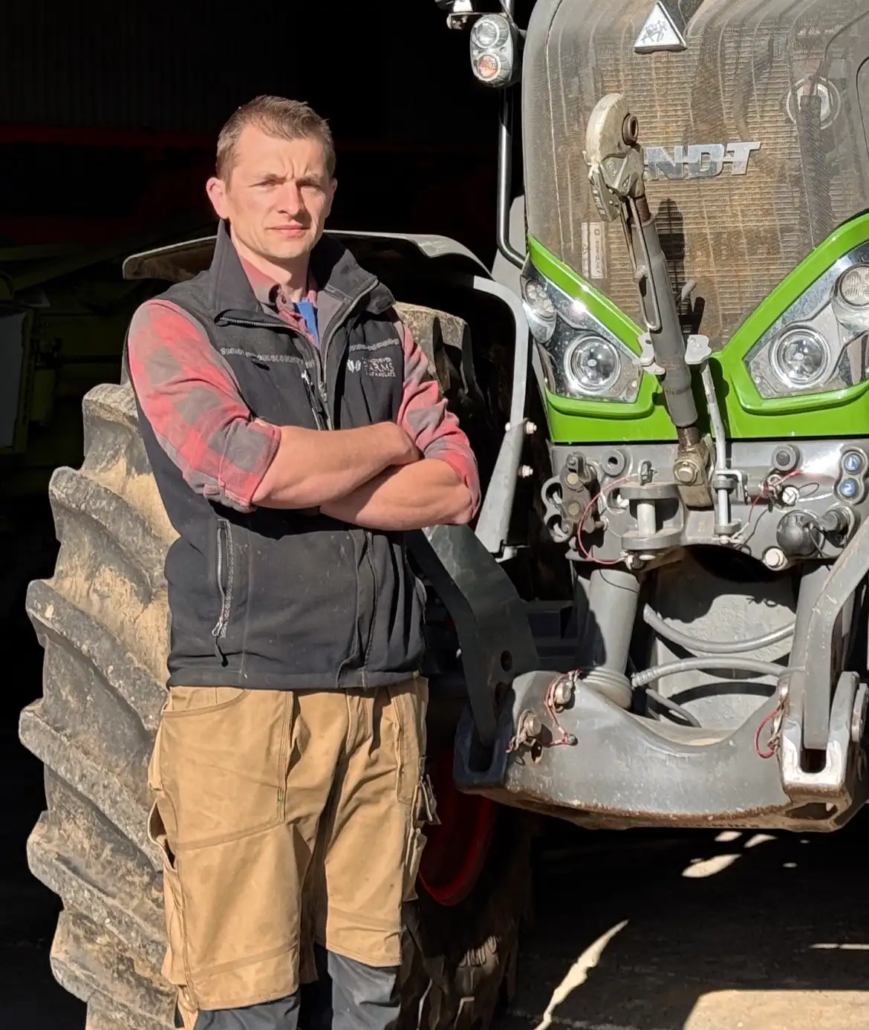
Richard Maddever, East of England