Measure spotlight: poly-cropping
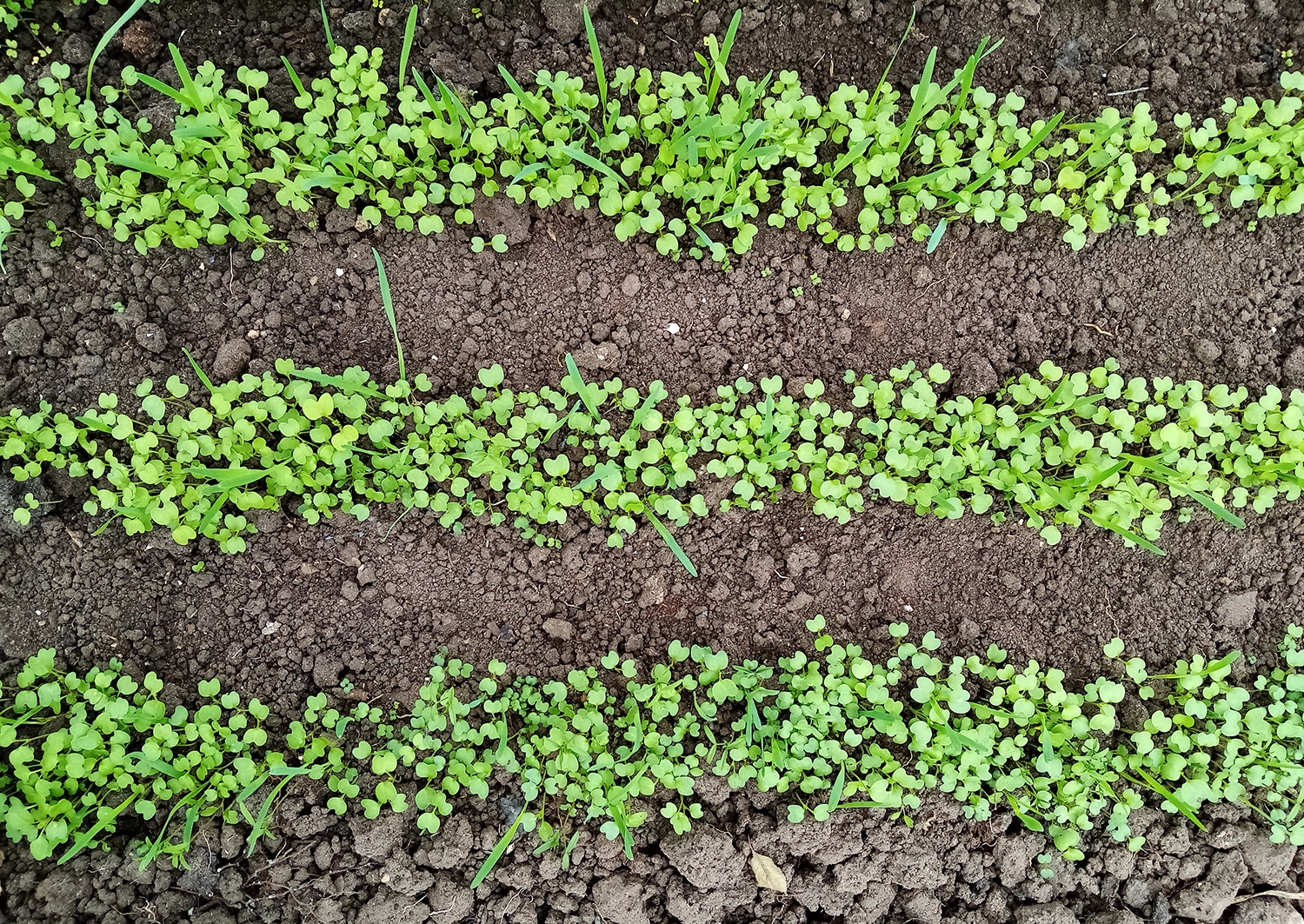
This edition we are looking at one of our new measures ‘poly-cropping’, which is active in some of our regions for Trade 2026. You can find out more about poly-cropping in this article from Farmers Weekly.
Several of our LENs farmers are growing two arable crops together, mustard and vetch, OSR & buckwheat are common examples. One farmer in Devon, Paul Baker, is having great success with poly cropping after starting bi-cropping and evolving to poly-cropping, growing 50 hectares of a 7-way mix of wheat, barley, oats, triticale, peas, vetch and rye.
Last year’s crop yielded 5.4t/ha and delivered 19.5% protein with a metabolizable energy (ME) of 12.9MJ/kg dry matter at the 140ha farm near Cullompton.
Grain is supplied to a regenerative pig producer, organic deer rearer, and beef finisher, as well as whole crop to a local dairy farm. This has opened the door to a strong local livestock feed market.
“It’s a niche product. It’s high in protein, locally produced and completely soya-free. There’s real demand for it,” says Paul, who finds himself in the unique position of influencing the price he sells at, an uncommon situation for many arable farmers. “I’m able to sell the polycrop for a premium price over standard grain markets,”
It’s all about adding value. “We’re producing local feed for local farms, and that relationship is incredibly important.”
About 30ha are grown fully organic, with the remainder managed in a conventional system, but still grown without synthetic inputs.
The move toward polycrops began four years ago as a response to squeezed margins and increasingly dry springs, which were limiting yields and exposing the vulnerability of relying on monocrops.
Operating a mix of organic and conventional cropping, fifth-generation Duchy estate tenant Paul was familiar with intercropping, but wanted to take this to the next level.
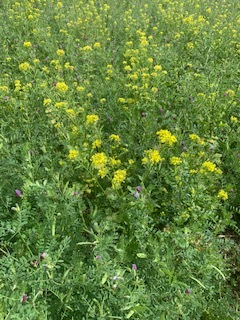
Mustard and vetch
After individual crops of beans and oats failed to stack up financially, Paul decided to give intercropping a go. Bicrops of beans and oats initially proved a success, but it wasn’t long until chocolate spot disease and weed issues began to take hold. This led Paul to the diversify his mixes further. By introducing multiple species with different rooting depths, growth habits, and stress tolerances, threats from weather, pests, weeds and disease became less of an issue.
Paul started off with a five-way species mix but has since added rye and vetch to the mix this season. The mix now consists predominately of peas for nitrogen fixation and protein benefits. Wheat makes up a low proportion due to its less competitive nature.
“Crops release a signal through their root networks informing the other crops to senesce at the same time. The challenge is different seeds dry at different rates. The bigger the seed, the longer it takes to dry,” says Paul.
Oats are typically ready first, while peas can take up to 10 days longer. Rather than investing in expensive new equipment, Paul purchased a second-hand Simba Freeflow strip-till drill for £4,000 and set about modifying it. The tine drill was re-engineered with JJ Metcalf legs and fitted with a home-made liquid applicator pump, enabling the application of molasses and seaweed at drilling. The total investment has reached about £7,000 – a fraction of the £50,000 price tag for a new machine.
Polycrops are planted in the spring. On the organic ground, cover crops are grazed and ploughed in ahead of strip-tilling, whereas the conventional ground sees covers sprayed-off before the drill pass. Soils are frequently deficient in magnesium, so magnesium sulphate – also known as Epsom salts – is applied as a foliar spray at 5kg/ha.
Paul’s journey towards reduced tillage began a decade ago, when he shifted away from a plough-based system. He went ‘cold turkey’ with the plough across the conventional area and used a set of discs instead.
In the first year, there was a modest yield penalty which he attributes to reduced mineralisation, as less soil disturbance limited oxygen availability and, in turn, nutrient release for crops.